
…we must foster global citizenship. Education is about more than literacy and numeracy — it is also about citizenry. Education must fully assume its central role in helping people to forge more just, peaceful and tolerant societies.”
– Ban Ki-moon (8th UN Secretary General)
The Concept
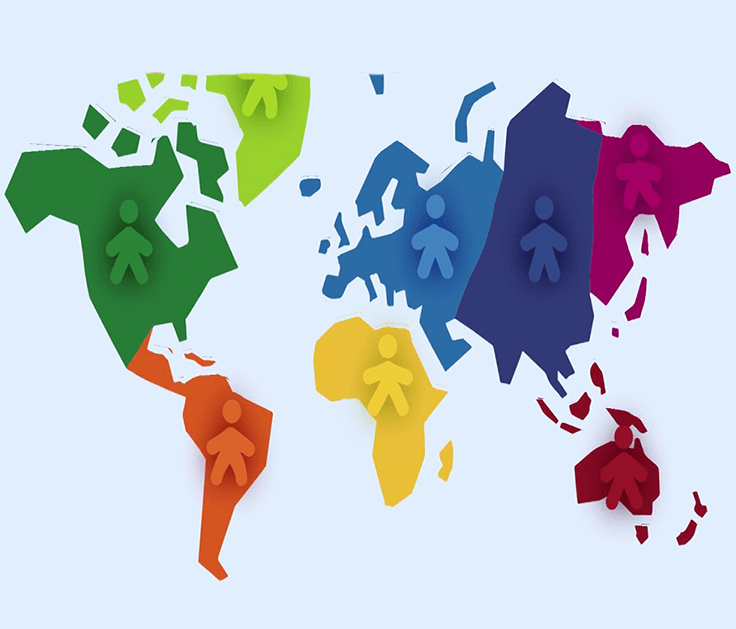
The concept of global citizenship lies at the heart of global studies. The idea of individual humans perceiving reality around them from the vantage-point of a global worldview, and acting in the interests of the planet and humanity as a single group, is fundamental to the strengthening of global law and governance.
Global citizenship secures global governance and global law, which together provide a foundation of legitimacy for insightful solutions to the challenges of global security and sustainability. In essence, global citizenship secures governance and law, and then acts as a filter for assessing policies in security and sustainability through the aspiration of governments and individuals to be ‘responsible global citizens’.
Global citizenship is not a new concept; indeed, the idea of universalism was one of the central characteristics of ancient and classical civilizations. Over the past four centuries, however, the Westphalian era of the nation-state has introduced and strengthened the concept of national citizenship to one of political dominance.
The notion of global citizenship has made a comeback for the many who see the transition from the us and them of the state interest to the we of the planetary interest. Kwame Anthony Appiah offers an modern approach to the ancient position, with his slogan ” cosmopolitanism is universality plus difference”, he challenges us to be global citizens with shared moral responsibilities to all of humanity, while also accepting and valuing differences in belief, colour, and creed. (NY Law|2014).
While grounded in universal principles, global citizenship celebrates identity and diversity. It gives us ways to become global without becoming the same – focusing on our common humanity while celebrating what makes us different.
Global Citizenship Education
Global citizenship education is a key tool in the response to contemporary challenges, transforming education by prioritising:
Transforming learning by prioritising:
Beginning with its first youth forum in 2013, the Centre has been active in the development and implementation of global citizenship education. Over the years since, the Centre has hosted forums, mentored young people and been represented internationally. The Centre has partnered to support policy, research and practice, locally, regionally and internationally. Most recently, the Centre partnered with the Centres of Asia-Pacific Excellence (CAPEs) in global citizenship education forums and an Asia-Pacific regional dialogue on the launch and implementation of UNESCO’s 2023 Recommendation on Education for Peace, Human Rights, and Sustainable Development. NZCGS has provided a home for the CAPEs Education work on global citizenship education, offering sustainability and ongoing impact to the original investment. Tuakiritanga (identity), hononga (connections) and kaitiakitanga (responsibility) are the three big ideas that underpin an Aotearoa NZ framework for GCED that the Centre carries forward as it:
- Supports policy makers and stakeholders
- Builds capacity for educators and lifelong learners
- Develops programmes and resources

The New Zealand Centre for Global Studies invites conversations with friends and potential partners as it builds a hub of excellence in global citizenship education and an ecosystem of connected interests, capabilities, and solutions.
Programme Co-ordinator
Libby Giles