
Step up to the World | Tū Māia ki te Ao: Global Citizenship and Peace
11th Annual Lecture and Peace Symposium, Wellington, 3–4 October 2024
Over two days in October 2024 the New Zealand Centre for Global Studies marked a turning point. The global citizenship education work of the Centres of Asia-Pacific Excellence (CAPEs) found a new home at the Centre. Our founding director, Dr Kennedy Graham, and two founding trustees, Professor Kevin Clements and Professor Klaus Bosselmann, stepped down. A new generation of trustees stepped up.
The evening of 3 October, at Public Trust Hall in Wellington, brought the CAPEs and Centre whānau together for the 11th Annual Lecture. The next morning, the conversation moved to Parliament for a Peace Symposium with Rt Hon Helen Clark and Professor Kevin Clements.
The evening
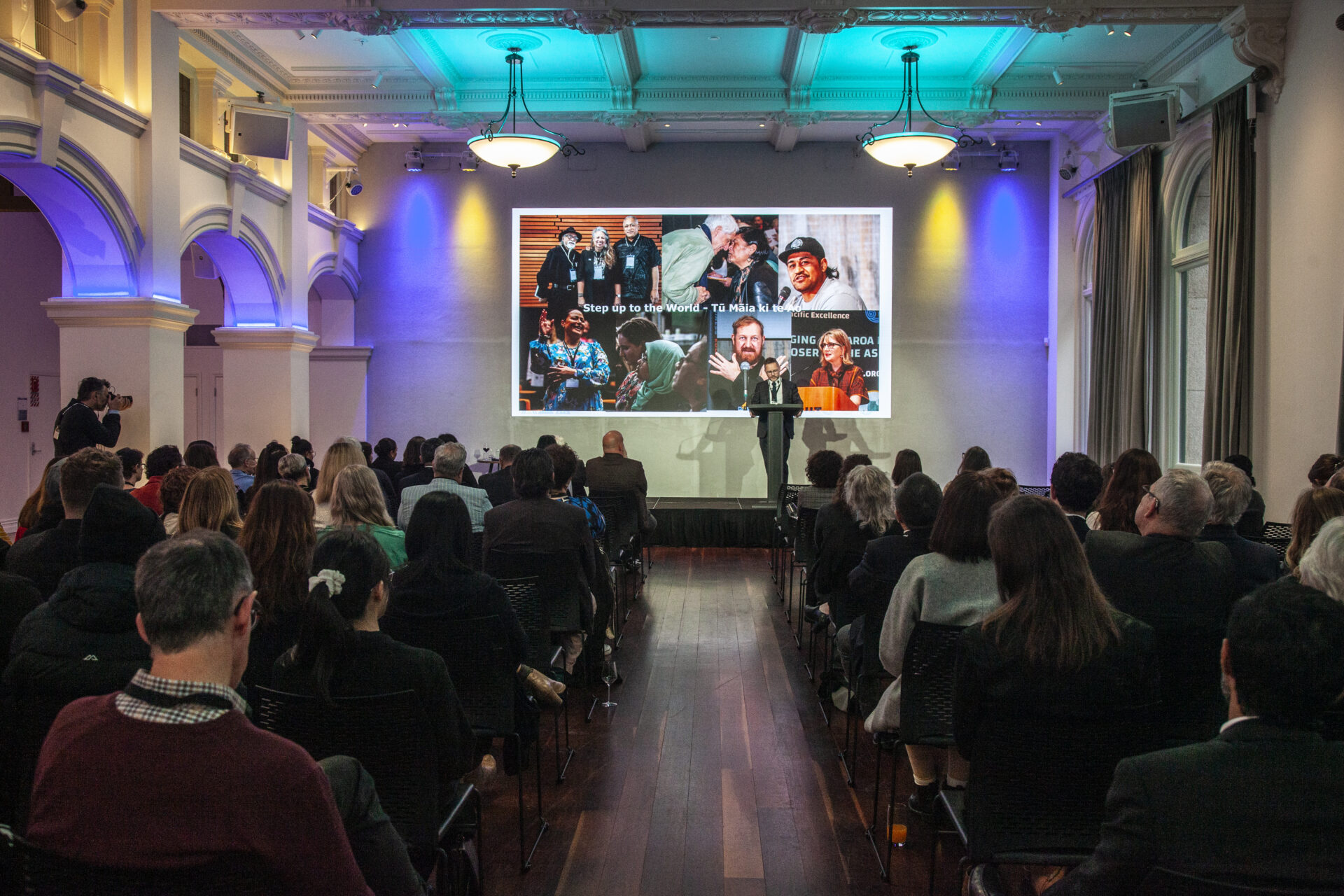
Step up to the World | Tū Māia ki te Ao: Global Citizenship and Peace was the final event for the CAPEs education initiative, a collaboration with the Centre. It celebrated the achievements of the CAPEs and passed their global citizenship mahi forward.
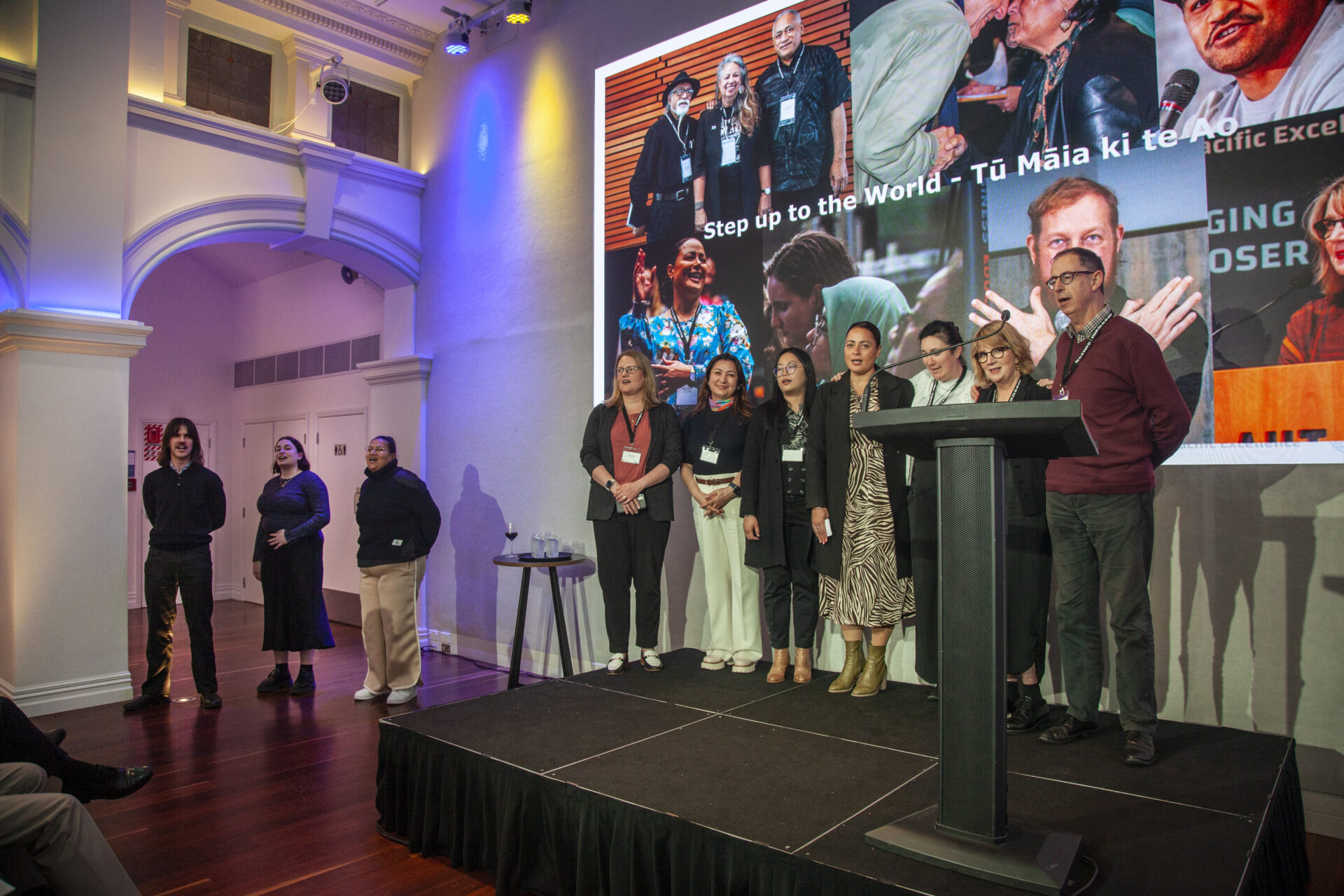
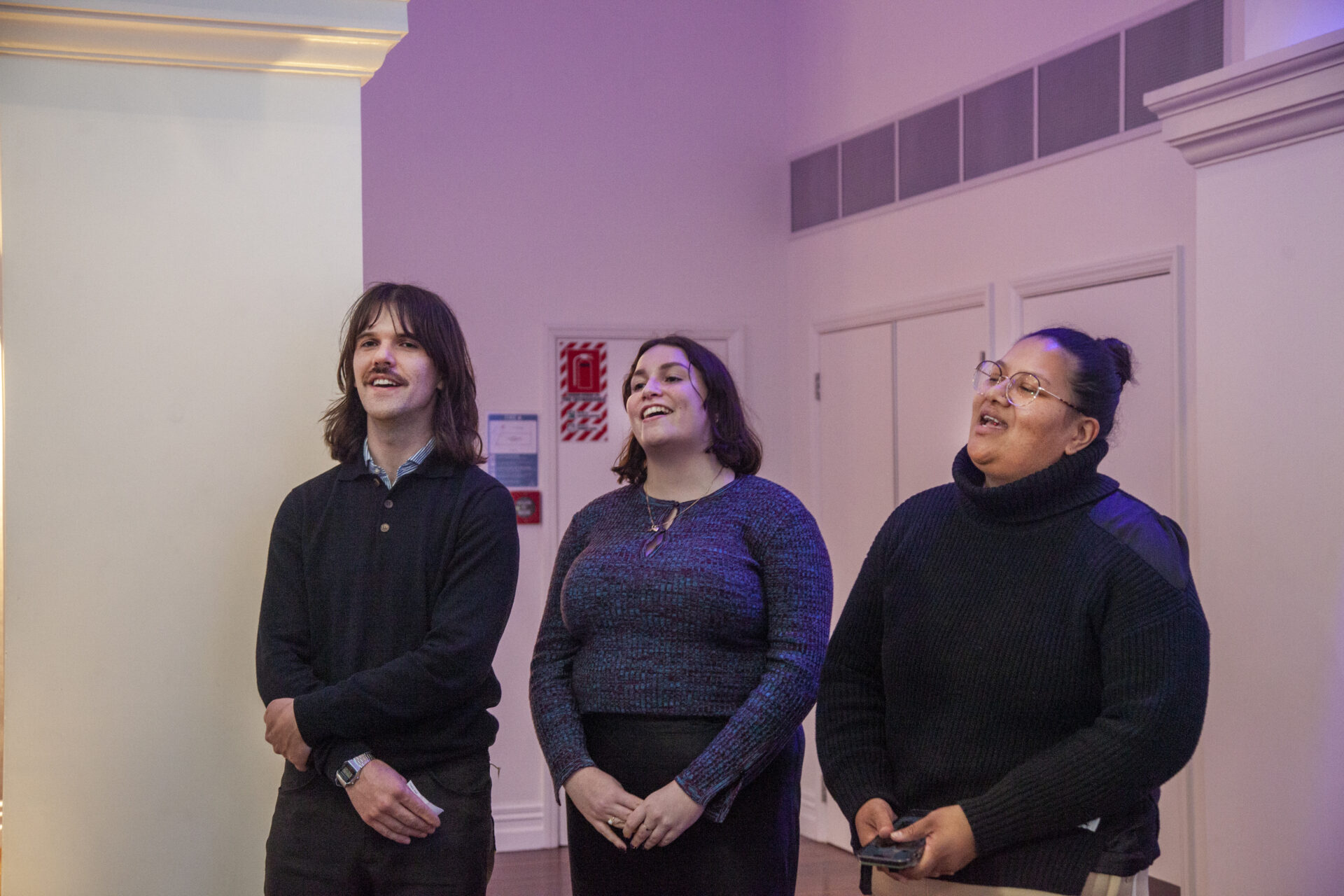
The evening opened with a mihi whakatau. Libby Giles welcomed guests on behalf of both organisations. Professor Chris Gallavin paid tribute to Dr Kennedy Graham, who then farewelled the retiring trustees and welcomed the new ones. Kennedy introduced the keynote speaker, Hon Nanaia Mahuta. At the end of the evening the CAPEs whānau were called on to the stage, and Nanaia led the waiata with a beautiful solo rendition of Six60’s “Pepeha”.
Welcome from Libby Giles
Libby spoke for two organisations that night, as director of education for the CAPEs and director of the Centre. Three CAPEs were set up in 2017 to engage New Zealand business with North Asia, Southeast Asia, and Latin America. Their funding ended in October 2024. “As one door closes, another opens for our initiatives as we find a home at the Centre, giving sustainability and ongoing impact to the original investment in the CAPEs.”
She described global citizenship as something older than any modern policy, with blueprints in indigenous knowledge systems and in the foundations of eastern and western thought. “It gives us ways to become global without becoming the same – focusing on our common humanity while celebrating what makes us different.” The Centre’s approach weaves Te Ao Māori perspectives into universal principles through three big ideas: tuakiritanga, hononga, and kaitiakitanga. Understanding who we are, how we are connected to each other and the living world, and where our responsibilities lie.
“We are horrified at the thought of students leaving school illiterate and innumerate. Should we not be equally concerned about the ability to think critically and act responsibly?”
Step up to the World | Tū Māia ki te Ao is the name of the programmes the Centre carries forward and grows. It is a call to embrace opportunity with courage, confidence, and responsibility. “Let’s change minds, not the climate,” she said.
Libby closed by farewelling the CAPEs: “Haere rā, CAPEs whānau, our mihi goes to you as we honour your legacy. We thank our distinguished speakers and guests, members of the diplomatic corps, partners, friends and colleagues. We invite you to step up to the world with us as partners and friends, leading change for a peaceful, sustainable, inclusive world.”
The 11th Annual Lecture
“Mo Tēnei Rā, Mo Tē Āpōpō Hoki – For Today and Tomorrow”, Hon Nanaia Mahuta
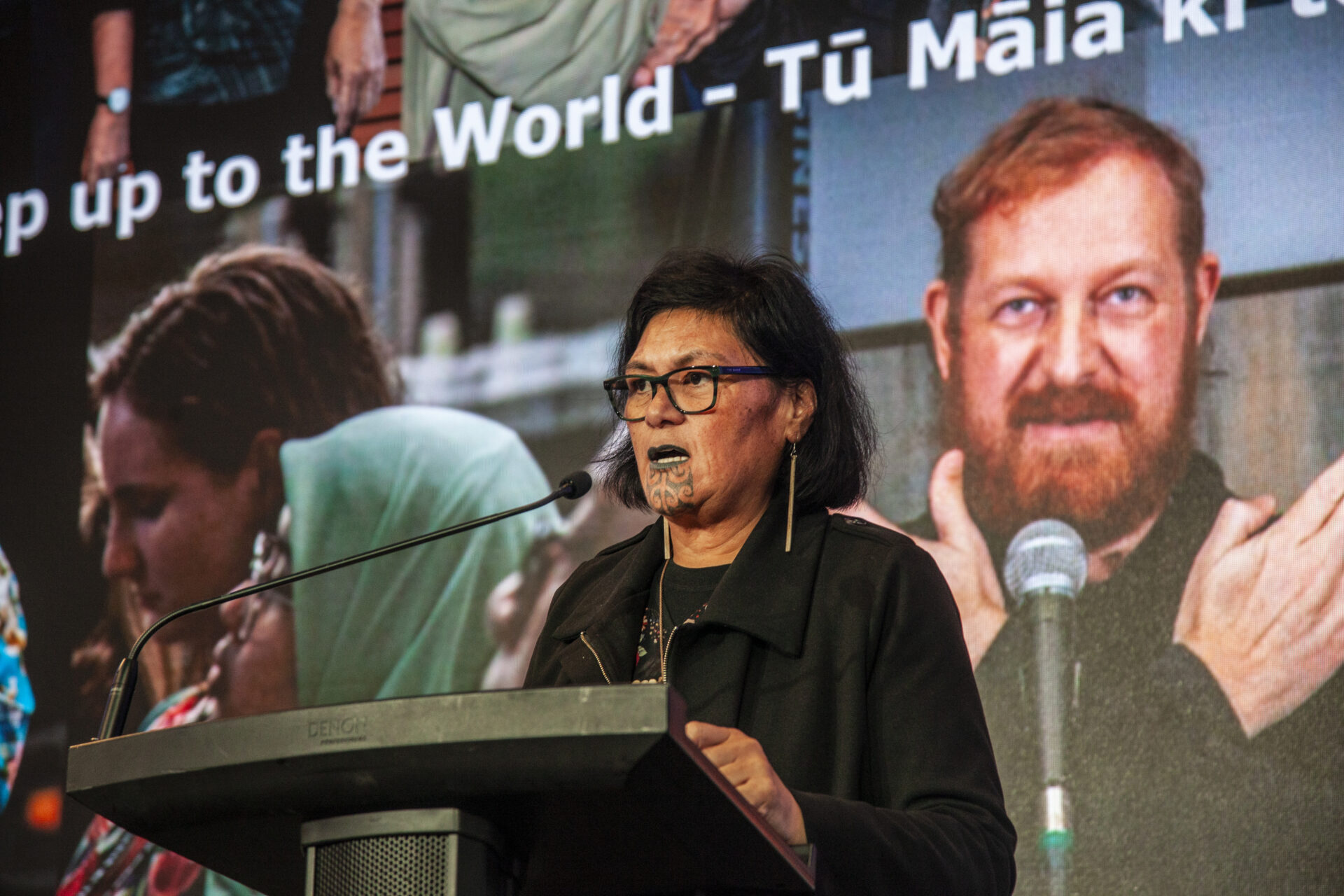
Nanaia Mahuta spoke as a newly appointed trustee. Her lecture set out where the Centre goes next. Its four original pillars remain: Global Citizenship and Education, Sustainability and Climate Change, Global Law and Governance, and Security and Disarmament. Three Māori concepts now sit alongside them as enablers: Tuakiritanga (identity), Hononga (connections), and Kaitiakitanga (stewardship). Together they shape a distinctive form of global citizenship that brings indigenous perspectives into global values.
She asked the question at the heart of the evening. “He aha te mea nui i te ao? What is the most important thing in the world? It is our people, our planet, our common humanity.”
The lecture ranged across the climate crisis and the Pacific, the erosion of trust in international law, the case for UN reform including removing the P5 veto, and the new risks of autonomous weapons and artificial intelligence. Her answer was education. She proposed that the Centre lead global citizenship education in Aotearoa and the Pacific, and help build a cadre of leaders and changemakers committed to a peaceful and prosperous region. Her message was clear: the status quo is not an option.
Dr Kennedy Graham, founding director
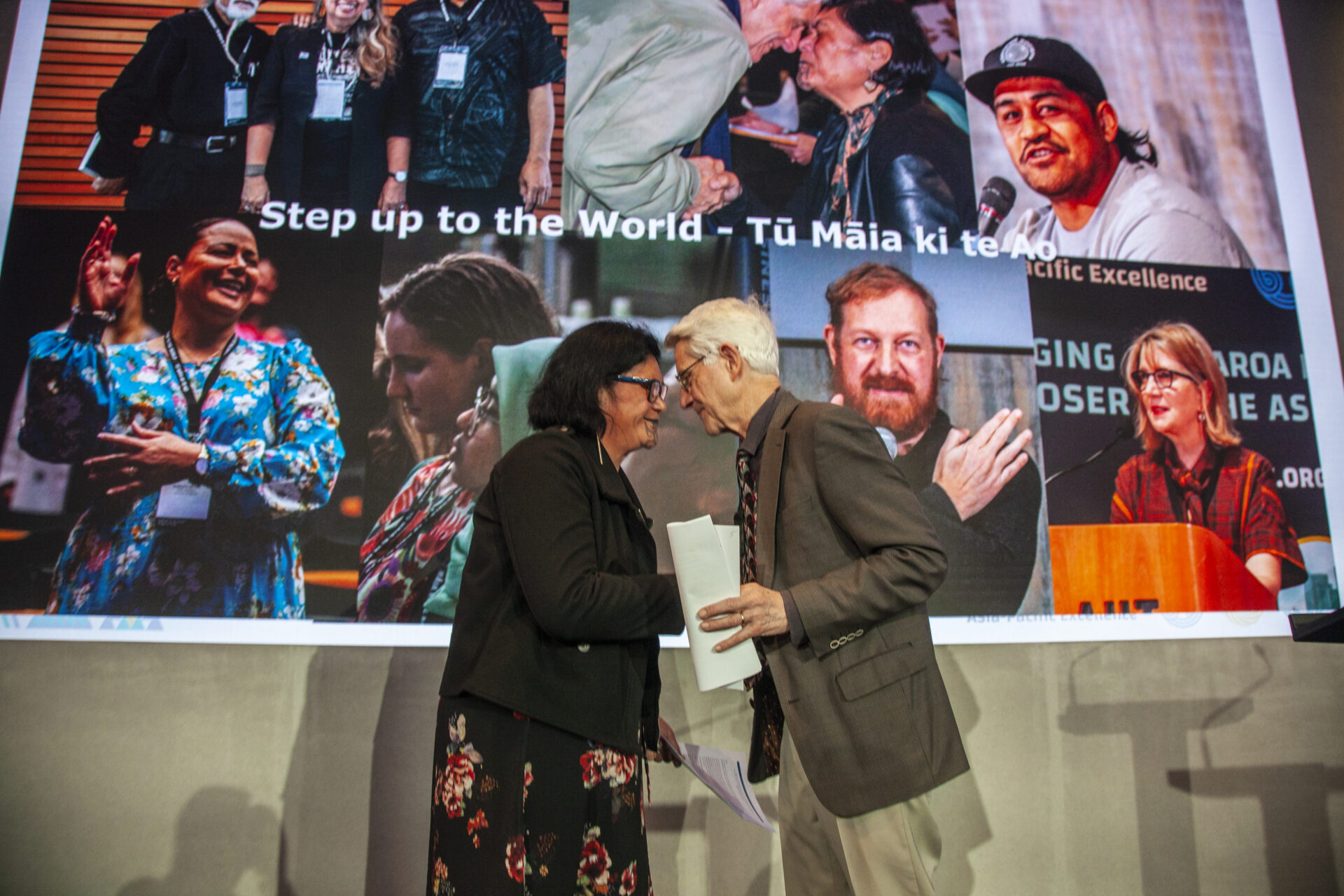
The Centre began with a conversation. In Rio in 2012, Kennedy Graham and journalist Rod Oram talked through the idea of a global studies think tank for this part of the world. A year later it was real. Kennedy led the Centre as its founding director and sat on its Board from 2012 to 2024.
His path to that point was a long one. He studied international relations at Victoria University of Wellington, across political science, economics, and law, then international law and diplomacy in Boston. In New Zealand’s foreign ministry he worked on strategic security and disarmament, and helped negotiate the 1985 Treaty of Rarotonga, which created the South Pacific Nuclear Free Zone. A posting in Geneva followed, then work in New York with Parliamentarians for Global Action, a fellowship at Cambridge, and ten years as a UN international civil servant, including at the UN Leadership Academy in Jordan. He later served three terms in the New Zealand Parliament.
Through all of it ran one idea: the “planetary interest”, a global interest in which some 200 national interests can be reconciled. Kofi Annan called it “the kind of forward-looking concept we need as the world goes through a period of profound transformation”. The Centre became the home for that thinking. Under Kennedy it held annual lectures, convened conferences and symposia, hosted interns, and built a peer-reviewed research series.
In his address on 3 October, Kennedy explained what sets global studies apart. International relations asks how we live together. Global studies asks whether we live together. “The approach is not normative but imperative.”
He began with a whakataukī that sums up his legacy: “He waka eke noa. We are all in this together. By ‘this’, I mean that we share one planet – all 8 billion of us.”
Professor Chris Gallavin, a founding trustee, paid tribute to Kennedy on the night. He shared a message from Simon Upton, Parliamentary Commissioner for the Environment, who was overseas and could not attend. Simon described Kennedy as “one of the most inspirational and public spirited people ever to have worked for improving environmental outcomes in NZ. His achievement in winning cross party support for climate legislation was truly remarkable.”
Chris also read Peace, a poem by Paula Green. Read Peace on NZ Poetry Shelf.
Ngā mihi nui, Kennedy, for the vision, the rigour, and the many years of service.
Read Kennedy Graham’s full address (PDF)
Founding trustees step down
Kennedy used his address to honour three people who shaped the Centre from the start.
Rod Oram, who died earlier in 2024, helped turn the idea of the Centre into reality. Kennedy described him as “one of the most capable, likeable and reliable people I have known”, whose insight on sustainability and climate change was without peer.
Professor Kevin Clements is a leading thinker in peace and conflict studies, with a career spanning universities and think tanks in the United States, Europe, Asia, Australia, and New Zealand. He has led International Alert, the International Peace Research Association, and now the Toda Peace Institute, and built the partnership between Toda and the Centre.
Professor Klaus Bosselmann is a leading thinker in environmental law and the author of the concept of Earth Trusteeship, which he has presented to the UN General Assembly. He gave the Centre’s first Annual Lecture in 2014 and was admitted to the Academy of the Royal Society Te Apārangi in 2023.
The Centre thanks Kevin and Klaus for more than a decade of service.
A new chapter

Three new trustees joined the Board that night.
- Associate Professor Guy Sinclair, international law, and the new coordinator of the Global Law and Governance programme. His book To Reform the World won the EU’s Academic Book Prize.
- Associate Professor Anna Hood, international security and disarmament law, University of Auckland, and the new coordinator of the Global Security and Disarmament programme.
- Hon Nanaia Mahuta, former Minister of Foreign Affairs and Mother of the House. Nanaia became Board Chair in December 2024.
With the CAPEs education work now based at the Centre, global citizenship education sits at the heart of everything we do, as we build a hub of excellence for Aotearoa New Zealand and the Pacific.
Peace Symposium: Challenges to Peace in Turbulent Times
4 October 2024, Banquet Hall, Parliament Buildings
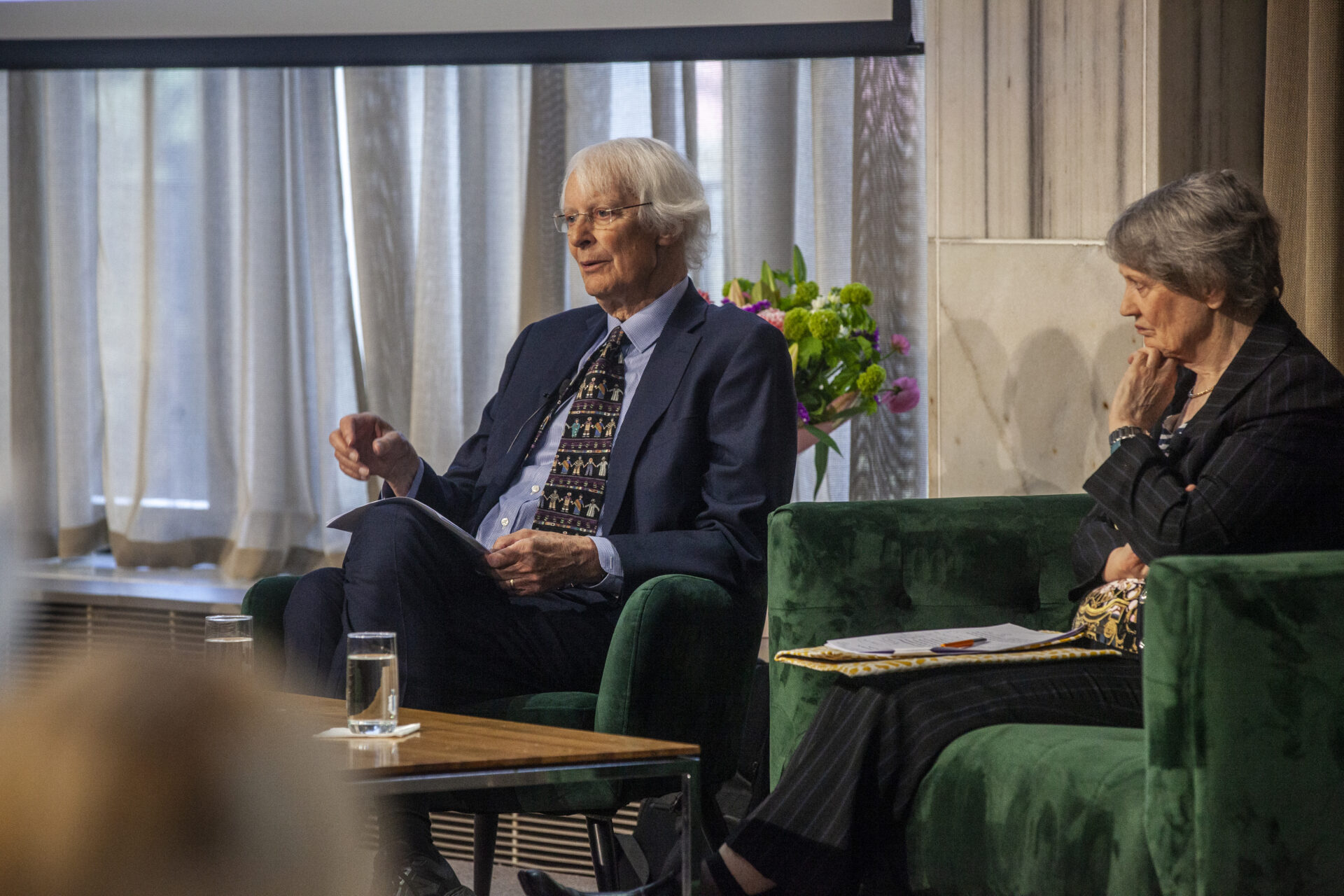
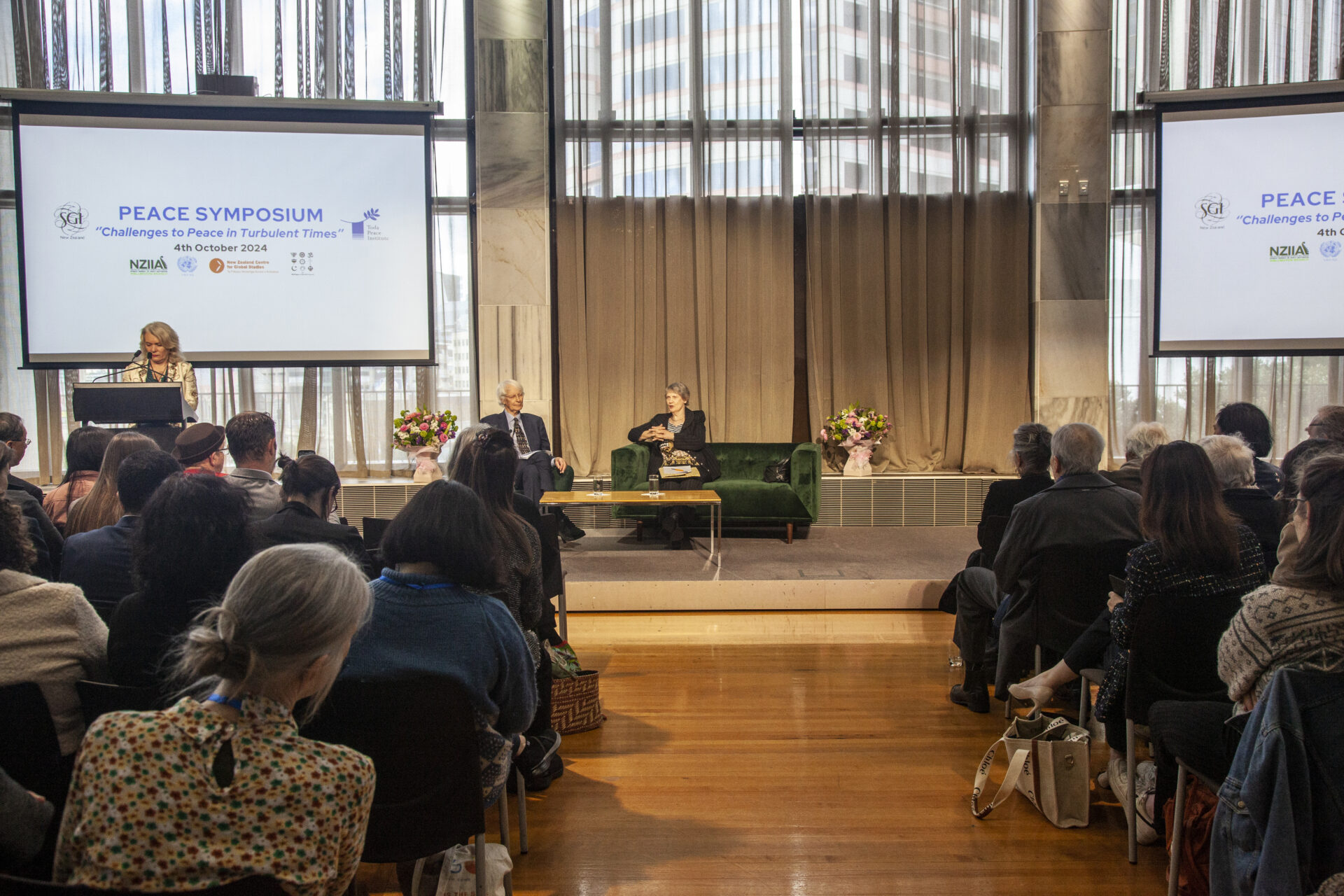
The morning after the lecture, Ingrid Leary MP hosted a dialogue between Rt Hon Helen Clark and Professor Kevin Clements at Parliament. They spoke about climate change, widening inequality, and political division, the pressures on the United Nations and other multilateral institutions, and the wars in Ukraine, the Middle East, and Africa. The focus was practical: what New Zealand can do to help build a more just, peaceful, and sustainable world.
The symposium was co-organised by SGI-New Zealand, the Toda Peace Institute, the New Zealand Centre for Global Studies, the NZ Institute of International Affairs Wellington Branch, the United Nations Association of New Zealand, and the Wellington Interfaith Council.